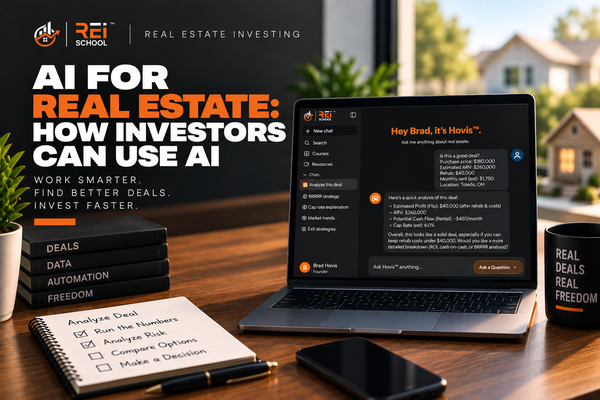
Artificial intelligence is becoming increasingly useful across many areas of business, including real estate investing.
For investors, AI can help organize information, speed up research, analyze data, and improve repetitive workflows.
However, AI should support investment decisions rather than replace proper due diligence and professional judgment.
Research and Organization
Investors deal with large amounts of information.
AI tools can help organize notes, summarize documents, structure research, and identify information that may require additional review.
Property Analysis
AI can assist with organizing property financial information and comparing different scenarios.
For example, investors can use AI to help structure:
- Income assumptions
- Expense assumptions
- Financing scenarios
- Cash-flow projections
- ROI calculations
- Property comparisons
The underlying numbers should still be verified.
Market Research
AI can help investors organize publicly available information and identify questions for further research.
However, investors should verify important market data using reliable sources before making decisions.
Automating Repetitive Tasks
Real estate businesses often have repetitive administrative tasks.
AI can potentially assist with:
- Data organization
- Lead qualification
- Document summarization
- Email drafting
- Reporting
- Content creation
- Workflow automation
AI Does Not Replace Due Diligence
An AI-generated analysis can contain incorrect or incomplete information.
Important investment decisions should be supported by verified financial data, appropriate professional advice, property inspections, legal review, and other due diligence where applicable.
Use AI as a Productivity Tool
The most practical way to approach AI is to use it to improve the processes you already have.
Start by identifying repetitive tasks that consume time, then determine whether AI can help make those tasks faster or more organized.
The foundation should remain the same: understand the property, analyze the numbers, evaluate the risks, and make decisions based on verified information.